
On this page you will find relevant industry news and information on the LED or Solid State Lighting industry. What the big players are up to and what interesting developments are happening in the world.
Sign up for our free newsletter!
Check back regularly for updates.
February 2012
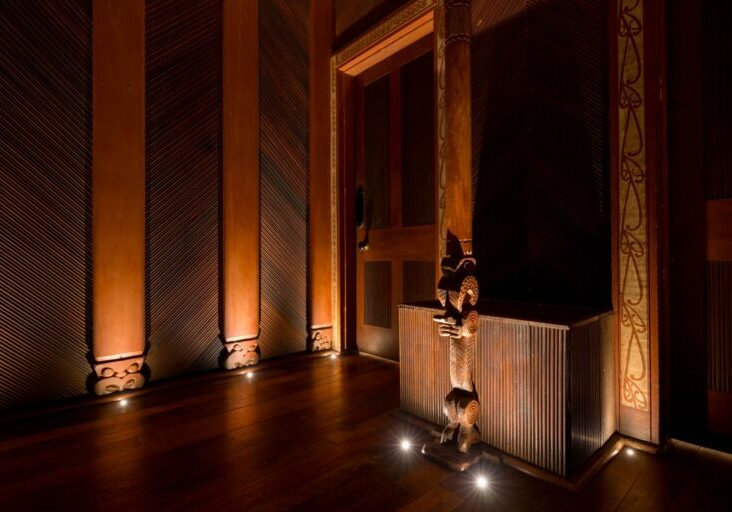
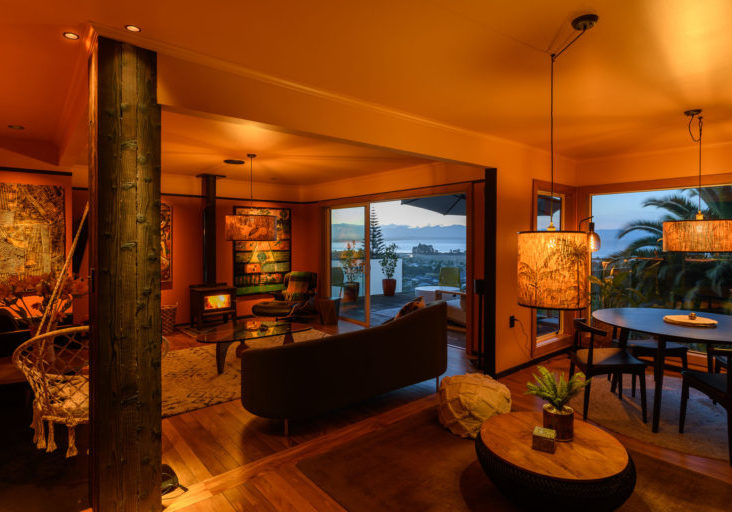
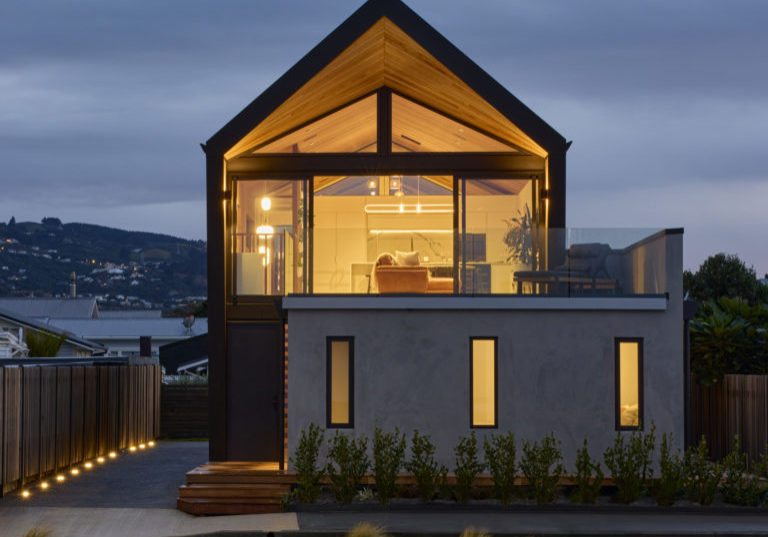
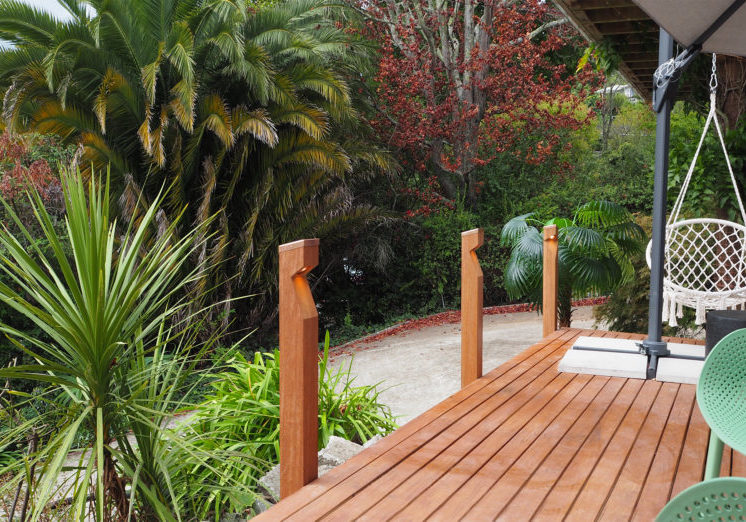
The house is as green as its surrounds; water comes from roof collection and a natural spring. Correct orientation, shading, and LED lighting throughout all contribute to the overall energy efficiency of the house, says Monk.

Photo by John-Paul Pochin
For the full story and article please click this link: Architecture Now - Onekoura Home
Nov 2011
The Questions is, when is New Zealand going to phase out incandescent lamps. 100% pure????
Global Legislation to Phase-Out Incandescent Lamps
…………………………………………………………………………………………………………………………
Energy Independence And Security Act of 2007 phases out inefficient incandescent lamps starting in 2010 and with 100W in 2012 and 60W & 40W in 2014
- Phases out lamps between 40 and 150 watts within the two year time line
- Requires light bulb makers to improve the efficiency of incandescent bulbs by 25 percent.
-
Phase II of this will start in 2020, which will effect all general purpose bulbs
Canada, European Union and other countries have enacted similar policies, examples of incandescent lamp bans:
-
Brazil and Venezuela phase out started in 2005
-
Switzerland, The Netherlands, Australia and Ireland began their phase out in 2009
-
Philippines phased out by 2010
-
Italy phase out began 2010
-
India will phase out by 2012
-
U.K. phases out by 2011
-
Finland phases out as of 2011
-
Argentina, Russia and Canada will phase out in 2012
-
All members of the EU will phase out by 2012
China agreed to phase out incandescent production over the next 10 years
- China accounts for 75% to 90% of world light bulb manufacturing
29/06/2011
New ENERGY STAR LED light bulb specification
30 June 2011 - The New Zealand ENERGY STAR LED (Light Emitting Diode) Light Bulb specification has been finalised and launched to the NZ lighting industry on 30 June 2011. The effective date of this specification is 1 August 2011.
The New Zealand ENERGY STAR specification is based on the internationally recognised US ENERGY STAR criteria.
24/06/2011
Consumer Report on LED Lighting
Light emitting diodes (LEDs) are getting better and cheaper.
LEDs have been round since the 1960s. But it’s taken years of continuous development to transform them into devices bright enough for general lighting – and that development continues, so LEDs should get better and cheaper.
LEDs have now moved into general lighting because of their extra-long life and low running costs. We take a look at what's available.
Read the full report here
10/06/2011
Blood debt
A designer based in Eindhoven has come up with a (literally) blood curdling way to get people thinking about energy consumption: what if light came at a physical cost to the individual?
Download our Product Catalogue here
right click the link and select "save as"
Please assist us with our product development by taking this 10 question survey Click here to take survey
It will take no longer than 5min and we collect no personal informatio
18.02.10
The technology is improving very quickly, LEDs have surpassed any other lighting technology as far as efficiency goes. To compare the below value of 208 lumens / watt. (these means that for every Watt of power going in you get 208 lumens out.) A traditional 100W lightbulb has an efficacy of approx 13 L/W, a halogen around 17 L/W and a CFL is around 50 L/W.
The Switch Lighting 12.5W Downlight has an efficacy of approx 70 L/W.
| Cree R&D result breaks 200 lumen per watt barrier | |
| 04 Feb 2010 | |
| Cree is claiming a new R&D record for a white high-power LED. | |
| High-power LED manufacturer Cree claims to have set a new laboratory record for a white, high-power LED of 208 lm/W. Just two months ago, Cree reported an R&D result of 186 lm/W.
The 208 lm/W LED produced 208 lumens of light output at a correlated color temperature of 4579 K. The tests were conducted under standard LED test conditions at a drive current of 350 mA at room temperature. As acknowledged in Cree's press release, this level of performance is not yet available in Cree’s production LEDs. The company says that this R&D result passes a "significant milestone" within the solid-state lighting industry, as well as demonstrating Cree’s "relentless drive" to increase the performance of its LEDs. “We have now broken the elusive 200-lumen-per-watt efficacy barrier for a single white power LED,” said John Edmond, Cree co-founder and director of advanced optoelectronics. “This is a result of improvements in blue [chip] optical output power, lower operating voltage and higher conversion efficiency. We continue to push the envelope in white LED technology to enable the highest efficiency white lighting products in the marketplace.” |
18.01.10
This is an interesting report by a Canadian newspaper into the long term effects of CFL bulbs. More reason to seriously consider the LED alternative. The investment payback is shorter than that of installing solar hot water and the returns are immeadiate
23.12.09
LED Lighting is more efficient than traditional Lighting.
A report by Cree (LED Manufacturer) shows that LED lighting products are now more efficient than traditional products. The comparison includes incadescent, halogen and compact fluorecent bulbs
13.12.09
Why Eco Light Bulbs arent what they seem
An Interesting report by a BBC Reporter on Compact Fluroescents. The last paragraph states "So it could only be a few years before people are lighting their homes with LED Lights". Why wait, we have the technology here now, get in and reap the benefits!
10.12.09
County Urged to Cut its Carbon Footprint
As world leaders meet in Copenhagen this week to discuss climate change, attention has focused on what organisations in Cambridgeshire are doing to cut carbon emissions. Jack Grove reports.
08.12.09
Cree and Liaoyuan Lighting Demonstrate 98.3 Lumen per Watt LED Streetlight
The Cree XLamp XP-G LED delivers up to 132 lumens per Watt component efficiency, and enabled Liaoyuan Lighting to create a street lamp system efficacy of 98.3 lumens per Watt in a 150-Watt product. Liaoyuan Lighting is planning volume production of these 150-Watt street lamps to address the lighting needs of more Chinese cities.
LED lamps are more efficient than Incandescents
The energy used in the manufacturing phase of all lamps is just a fraction of the total, less than 2 per cent of the total. However, the study reveals that both compact fluorescents and LEDs use about 20 per cent of the electricity for creating the same amount of light as a standard incandescent.........
The study provides evidence that clinches the issue and shows that over the entire lifecycle of the bulb from manufacturing to disposal, the energy used for incandescent bulbs is almost five times that used for compact fluorescent lamps and LED lamps.